Attic Water Damage & Insulation Drying in Lakeland, FL
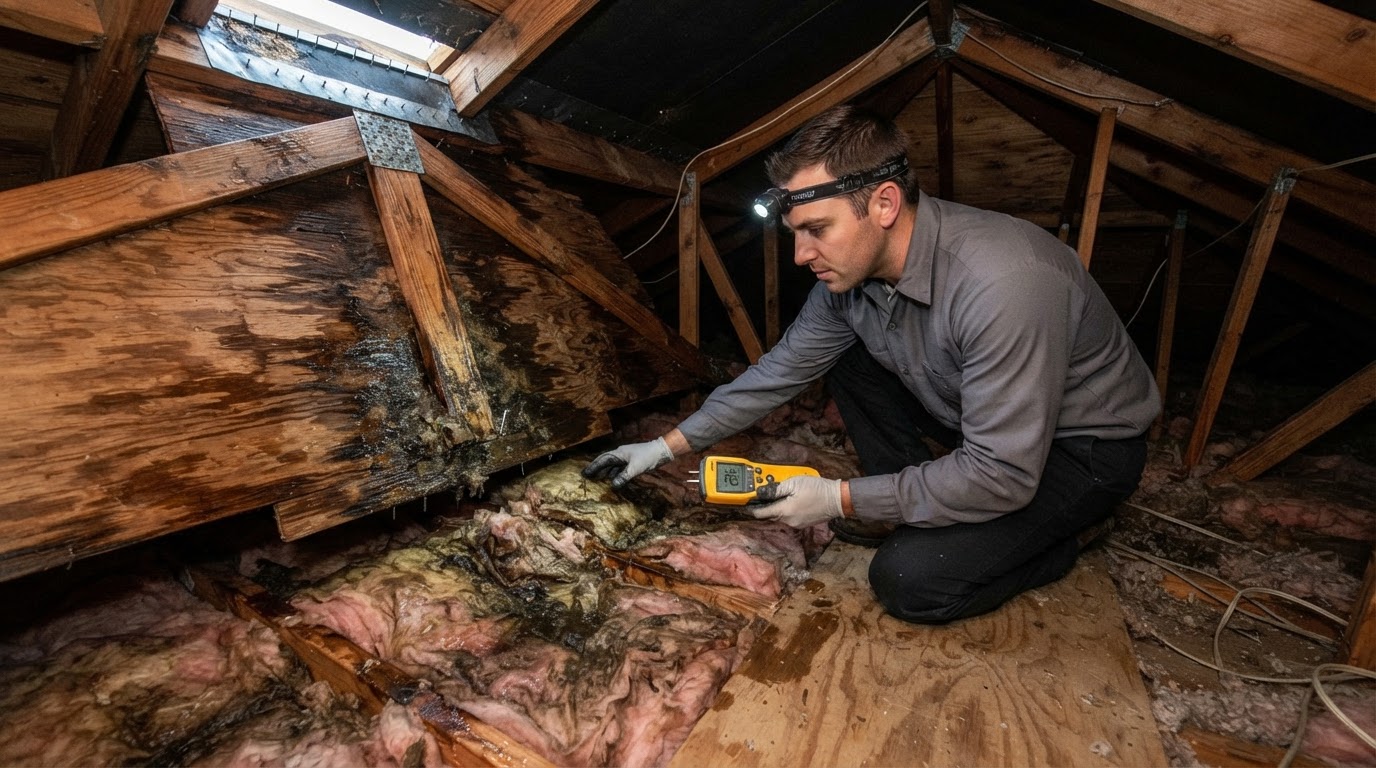
Attic water damage and insulation drying is the moisture assessment, structural drying, and material evaluation work that follows water entering an attic from a roof leak, wind-driven rain, flashing failure, plumbing line, or HVAC condensate problem. In Lakeland, FL, water that enters an attic can soak insulation, wet the roof deck and wood framing, and travel downward into ceiling drywall and wall cavities before it is noticed inside the living space. Because attics are not visited daily, moisture can accumulate for extended periods. Lakeland Water Damage Restoration provides moisture assessment and structural drying for attic water damage across Lakeland and Polk County. Call (863) 614-1214 to discuss cleanup assistance.
What Causes Attic Water Damage & Warning Signs
Attics sit directly beneath the roof, so most attic water damage begins with water entering through the roof system. Roof leaks, wind-driven rain, damaged flashing, and storm damage allow water past the roof covering and into the attic space. Plumbing lines routed through the attic, HVAC air handlers and condensate drain lines, and vent penetrations can also release water into the attic. Because attic insulation and wood framing absorb water slowly, the damage often develops out of sight until a ceiling stain appears below.
Roof Leak
Damaged or aging roof materials allow water past the roof covering during rain, wetting the roof deck, insulation, and framing beneath before traveling down to the ceiling below.
Wind-Driven Rain
Strong winds during Central Florida storms can drive rain through roof vents, penetrations, and flashing gaps that would normally shed water, introducing moisture into the attic.
Flashing Failure
Damaged or deteriorated flashing around chimneys, vents, and roof valleys allows water to enter at joints and penetrations, often producing a slow, recurring attic leak.
Attic Plumbing Line
Plumbing supply or drain lines routed through the attic can develop leaks or condensation that drips onto insulation and framing, sometimes for weeks before discovery.
HVAC Condensate
An air handler or condensate drain line in the attic can overflow or leak, releasing water onto attic insulation and the ceiling drywall below the unit.
Warning Signs of Attic Water Damage
Ceiling stains below the attic, damp or compressed insulation, water stains on the roof deck, musty odors, and warped ceiling drywall all suggest water has entered the attic space.
What should I do if I discover wet insulation in my attic?
If you discover wet insulation in your attic, avoid entering the attic if access is unsafe or if wet electrical components are present, and do not walk on saturated insulation or compromised ceiling drywall. Arrange for a roofing contractor or plumber to control the source of the water, then contact a water damage restoration provider to assess how far moisture has spread through the insulation, roof deck, framing, and ceiling below. Do not attempt to diagnose or repair the roof source during wet or storm conditions.
What Attic Water Can Affect & Hidden Pathways
Water that enters an attic soaks insulation, wets the roof deck and wood framing, and travels downward through ceiling assemblies into the living space below. Because insulation holds moisture against structural wood and ceiling drywall, the damage often extends well beyond the visible entry point. Understanding these hidden pathways explains why attic water damage cleanup includes the ceiling and walls below, not just the attic itself.
Fiberglass & Blown Insulation
Insulation absorbs and holds water against the ceiling drywall and framing below. Saturated insulation loses its insulating value when compressed, and different materials respond differently to drying, so each type is evaluated individually.
Roof Decking
The plywood or oriented strand board roof deck beneath the roof covering can absorb water from a leak, producing staining, swelling, and potential loss of structural integrity over time.
Wood Framing & Trusses
Roof trusses and framing members hold moisture after insulation gets wet, and prolonged dampness can increase the potential for microbial growth on structural wood surfaces.
Ceiling Drywall
Water that travels through the attic assembly appears as staining, bubbling paint, or sagging in the ceiling drywall of the room below, sometimes far from the actual roof entry point.
Wall Cavities Below
Water that runs along framing members can enter wall cavities below the attic, wetting insulation and drywall in walls that show no visible damage from inside the living space.
Attic Flooring
Where attic flooring exists, water can saturate the boards and the ceiling drywall beneath them, trapping moisture between layers that resists drying without targeted access.
Key point: Because attic water travels downward through insulation, structural wood, and ceiling assemblies, the visible ceiling stain is often only the lowest point of a larger moisture path. Moisture detection across the attic and the ceiling below is what separates a complete drying project from a surface cleanup.
Materials Affected by Attic Water Damage
Attic water damage affects the insulation, structural wood, and ceiling systems that sit between the roof and the living space. Because water travels downward through these layers, the damage often reaches the ceiling drywall and walls below before it is discovered. Understanding how each material responds to saturation helps explain the scope of attic cleanup.
Coordinate Source Control
A roofing contractor, plumber, or HVAC professional is arranged to stop the source of water entering the attic so no additional moisture accumulates during drying.
Safe Inspection
The attic is inspected for wet insulation, roof deck staining, saturated framing, and ceiling drywall condition, with access limited to safe areas.
Moisture Mapping
Moisture meters trace water through insulation, across the roof deck, into wood framing and trusses, and downward into the ceiling drywall and wall cavities below.
Evaluate Insulation
Wet insulation is evaluated based on material type, saturation, compression, contamination, and drying feasibility to determine whether it can be dried or should be removed.
Remove Affected Material
Severely saturated or contaminated insulation is removed where necessary so that structural wood and ceiling systems beneath can be accessed for drying.
Dry Structural Wood
Air movers and dehumidifiers dry the roof deck, trusses, and ceiling framing, with equipment positioned to circulate air through the affected attic space.
Monitor Moisture
Readings are taken over the drying period to confirm that structural wood and ceiling materials reach an appropriate dry standard before equipment is removed.
Attic Water Damage Across Lakeland
Lakeland's Central Florida location brings seasonal heavy rain, thunderstorms, and tropical systems that can drive water past roof coverings into attic spaces. Wind-driven rain during summer storms can enter through vents and flashing gaps that normally shed water, and high humidity after water intrusion slows natural drying inside an enclosed attic. Attic plumbing lines and HVAC air handlers add additional indoor water-loss sources that can wet insulation and framing for extended periods before discovery.
After the roof or plumbing source is controlled, most attic water damage requires moisture assessment and structural drying to address wet insulation, roof decking, and ceiling materials. Lakeland Water Damage Restoration focuses on the water that entered the attic and affected building materials, while a roofing contractor may be needed to repair the exterior roof source. This page concentrates on attic water damage and insulation drying specifically; the broader roof, ceiling, and wall hidden damage page covers concealed moisture throughout the property. Related services such as structural drying, ceiling water damage cleanup, and storm water damage restoration are often part of the same project. Service-area pages are also available for surrounding communities across Polk County and Central Florida through our Service Areas section.
Attic Water Damage & Insulation Drying Questions & Answers
What causes attic water damage?
Attic water damage is most often caused by roof leaks, wind-driven rain, damaged flashing, or storm damage that allows water past the roof covering. Attic plumbing line leaks, HVAC condensate drain overflows, and vent penetration leaks can also introduce water into the attic. A roofing contractor, plumber, or HVAC professional can identify and correct the specific source.
Can roof leaks soak attic insulation?
Yes. Water that enters through the roof covering during rain soaks the insulation beneath, which then holds moisture against the roof deck, framing, and ceiling drywall below. Because insulation absorbs water slowly and the attic is not visited daily, insulation can remain wet for extended periods before the damage is discovered inside the living space.
Can wet insulation be dried?
Sometimes. Whether wet insulation can be dried depends on the material type, saturation level, contamination, compression, and whether effective drying can be achieved. Fiberglass and blown insulation respond differently to water, and heavily saturated or contaminated material may need removal so that structural wood beneath can be dried. Each situation is evaluated based on condition rather than a universal rule.
What happens if attic insulation stays wet?
If attic insulation stays wet, it holds moisture against the roof deck, wood framing, and ceiling drywall, which can increase the potential for microbial growth on structural wood surfaces and ceiling materials. Prolonged dampness can also reduce the insulating value of compressed material and contribute to musty odors. Drying or removing wet insulation helps limit secondary damage to the structure below.
Can attic water damage the ceiling below?
Yes. Water that enters the attic travels downward through insulation and framing to the ceiling drywall below, often appearing as staining, bubbling paint, or sagging. The ceiling stain may appear far from the actual roof entry point because water follows framing members and roof deck surfaces before becoming visible.
Can water travel through roof framing?
Yes. Water that enters at one point on the roof can run along the roof deck surface, follow framing members and trusses, and appear as a ceiling stain in a different part of the house. This is why moisture mapping across the attic and ceiling is necessary to locate the full extent of the damage, not just the visible stain.
Who repairs the roof source of attic water?
A roofing contractor repairs the exterior roof covering, flashing, or penetration that allowed water to enter the attic. Lakeland Water Damage Restoration does not perform roof repair; it focuses on the water that entered the attic and affected insulation, structural wood, and ceiling materials. Both are often needed, with the roof source corrected so that drying can proceed.
How is attic moisture detected?
Attic moisture is detected using moisture meters and thermal imaging across the insulation, roof deck, wood framing, and ceiling drywall below. Comparison readings between affected and unaffected areas help determine how far water has spread through the attic assembly. This mapping guides where insulation is removed and where drying equipment is positioned.
Does insurance cover attic water damage?
Coverage depends on the source of the loss, policy terms, exclusions, endorsements, maintenance conditions, and the insurer's determination. A sudden storm-related roof leak is often handled differently than a slow leak that developed over time from deferred maintenance. Property owners should review their policy and speak with their insurance carrier about the specific loss.
Attic Water Damage Affecting Your Lakeland Property?
Call Lakeland Water Damage Restoration at (863) 614-1214 to discuss moisture assessment, insulation evaluation, and structural drying after attic water damage. You can also submit a service request below and our team will follow up.
Call (863) 614-1214Lakeland, FL 33810 • Serving Polk County & Central Florida
Request Attic Water Damage Cleanup Service
Submit your details or call our Lakeland team directly.