
AC Drain Line Overflow Water Damage Cleanup in Lakeland, FL
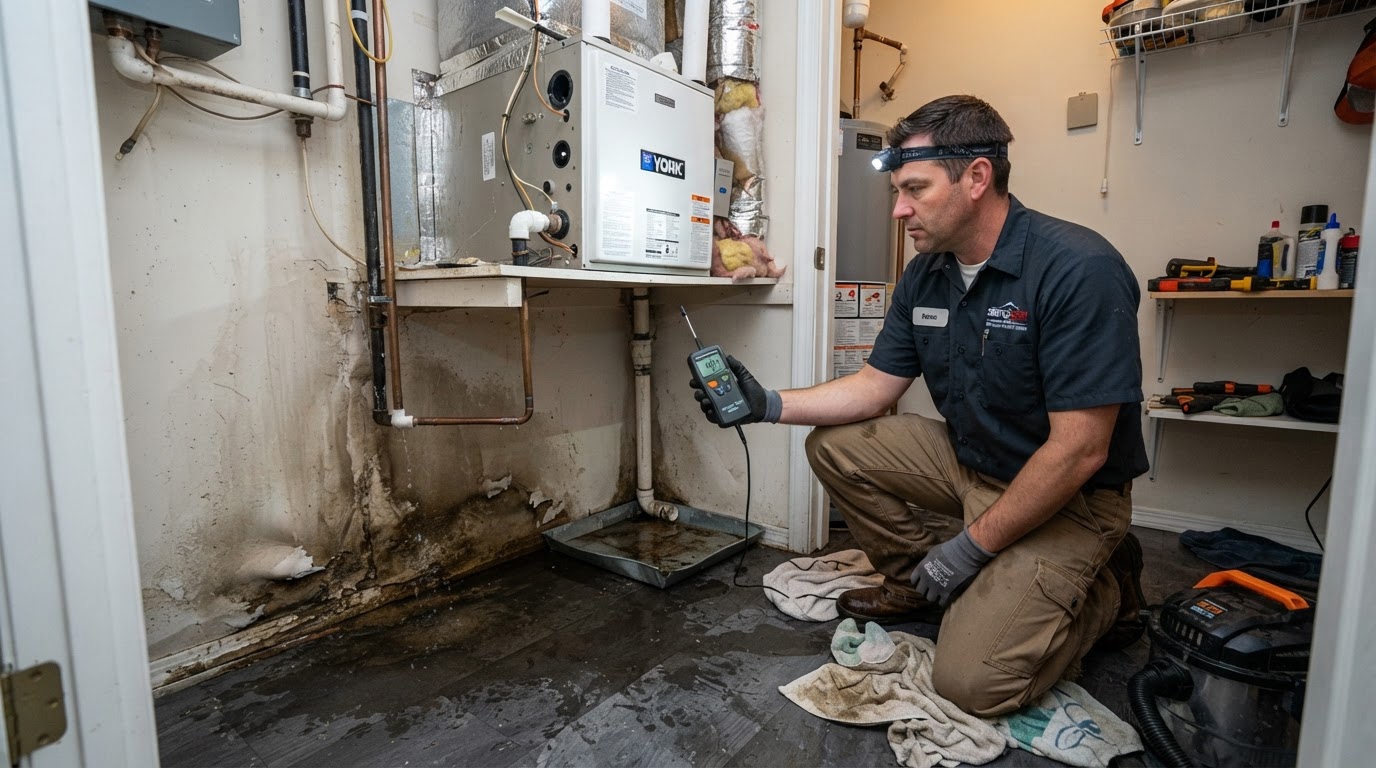
AC drain line overflow water damage cleanup is the moisture detection, water removal, and structural drying work that follows water escaping from a clogged condensate drain line or overflowing drain pan. In Lakeland, FL, a clogged condensate drain, a blocked drain line, an overflowing pan, a drain connection problem, or a slow recurring condensate leak can allow water to pool around the air handler and migrate into surrounding drywall, flooring, and ceiling materials. Because AC closets and utility areas are not visited daily, a condensate overflow can wet building materials for some time before it is discovered. Lakeland Water Damage Restoration provides moisture detection, cleanup, and structural drying for properties across Lakeland and Polk County. Call (863) 614-1214 to discuss cleanup assistance.
Why AC Drain Lines Overflow & Warning Signs
An air conditioner removes humidity from the air and channels the resulting condensate through a drain line to the outside. When that line clogs, or the drain pan overflows, water has nowhere to go but out around the air handler. Because the drain line and pan are inside the HVAC closet or utility area, an overflow can wet drywall, flooring, and ceiling materials for days before anyone notices. Central Florida's heavy air-conditioning use makes condensate drainage problems a common source of indoor water damage.
Clogged Condensate Drain Line
Algae, debris, and sediment build up inside the condensate drain line over time, blocking the flow and forcing water back toward the air handler and out of the pan.
Overflowing Drain Pan
When the drain line is blocked, the drain pan fills and overflows, sending water across the floor of the HVAC closet and into surrounding drywall and flooring.
Drain Connection Problem
A loose or disconnected drain connection at the pan or line allows condensate to escape before it reaches the drain, often producing a slow, recurring leak.
Condensate Pump Failure
Where a condensate pump is used to move water, a pump failure allows water to collect and overflow the pan, particularly in configurations where gravity drainage is not possible.
Slow Recurring Moisture
A partial blockage or small connection leak can produce intermittent moisture that wets drywall and flooring over weeks without creating an obvious puddle.
Warning Signs of an Overflow
Water on the floor near the air handler, a wet AC closet, ceiling staining below the unit, musty odors, and discolored baseboards all suggest condensate water has been escaping.
What should I do when the AC condensate drain overflows?
When the AC condensate drain overflows, shut down the cooling system according to the manufacturer's guidance if it can be done safely, and avoid contact between standing water and any electrical components near the air handler. Contain the water where practical, then contact an HVAC professional to clear or repair the condensate system and a water damage restoration provider to assess how far moisture has migrated into surrounding drywall, flooring, and ceiling materials. Do not attempt detailed HVAC repair procedures yourself in wet conditions.
What Condensate Water Can Affect & Hidden Pathways
Condensate water from an AC drain overflow pools around the air handler and then migrates outward into the surrounding materials. Because HVAC closets share walls, floors, and ceilings with adjoining rooms, water can travel into drywall, beneath flooring, and through the ceiling below before it is noticed. These hidden pathways are why moisture detection across the surrounding area is central to this cleanup.
HVAC Closet Flooring
Water pools on the closet floor and seeps beneath flooring into the subfloor, where it cannot evaporate on its own. Trapped moisture can loosen flooring and require targeted drying beneath the surface.
Drywall
Drywall in and around the HVAC closet wicks water upward, producing staining, softness, and loss of integrity. Condensate leaks often wet drywall for extended periods before they are noticed.
Baseboards
Baseboards trap moisture against the wall and wick water along their length. Swollen or discolored baseboards near the air handler often signal that moisture has reached the drywall behind them.
Ceiling Materials
When the air handler is in an upper-level closet, condensate water can travel through the floor assembly and appear as staining or sagging in the ceiling of the room below.
Adjacent Room Flooring
Water migrates from the HVAC closet into the flooring of adjacent rooms, where it seeps beneath the surface and wets materials that are not directly next to the air handler.
Wall Cavities & Subfloor
Condensate water enters wall cavities and the subfloor, where it remains hidden and resists drying without targeted access and airflow. These spaces often hold moisture long after visible surfaces appear dry.
Key point: Because condensate water migrates from the HVAC closet into drywall, flooring, and ceiling materials of adjoining rooms, the visible water around the air handler is rarely the full extent of the loss. Moisture detection across the surrounding area is what separates a surface cleanup from a complete drying project.
Materials Affected by AC Drain Line Overflows
An AC drain overflow affects the materials around the air handler and the adjoining rooms that share walls, floors, and ceilings with the HVAC closet. Understanding how condensate water migrates through these materials helps explain why cleanup extends beyond the closet and why drying often continues after the floor looks dry.
Control the Source
The cooling system is shut down where appropriate, and an HVAC professional is arranged to clear or repair the condensate drain line or pan so no additional water enters the area.
Inspect the HVAC Closet
The floor, drywall, baseboards, and ceiling of the HVAC closet and surrounding areas are inspected for saturation, since condensate water frequently migrates beyond the closet.
Remove Standing Water
Any standing water around the air handler and on the surrounding floor is extracted to halt ongoing absorption into drywall, flooring, and the subfloor.
Map Hidden Moisture
Moisture meters and thermal imaging trace water that has moved into drywall, beneath flooring, into the subfloor, and through the ceiling or wall cavities of adjacent rooms.
Dry & Dehumidify
Air movers and dehumidifiers are positioned to evaporate bound moisture from wet materials and capture it from the air, with access created where necessary to reach trapped water.
Manage Humidity
Dehumidification controls indoor humidity during drying, which is especially important in a Central Florida climate where natural evaporation is slow.
Monitor Until Dry
Readings are taken over the drying period to confirm progress and verify that affected materials reach an appropriate dry standard before equipment is removed.
AC Drain Line Water Damage Across Lakeland
Lakeland's warm, humid climate means air conditioning runs frequently for much of the year, which also means condensate drain lines carry a steady flow of water. A clogged drain line or overflowing pan can allow that water to escape into surrounding building materials, often in an HVAC closet that is not visited daily. Central Florida's high humidity also slows natural drying after a condensate water loss, making controlled dehumidification more important for returning affected materials to an appropriate dry standard.
After the source is controlled, most properties still require structural drying to address moisture that has migrated into drywall, flooring, and ceiling materials. Lakeland Water Damage Restoration focuses on the water that escaped the condensate system and affected building materials, while an HVAC professional may be needed to clear or repair the drain line itself. This page concentrates on AC drain line overflow specifically; the broader AC and HVAC condensate page covers appliance leaks as well. Related services such as structural drying, hidden water damage cleanup, and ceiling water damage cleanup are often part of the same project. Service-area pages are also available for surrounding communities across Polk County and Central Florida through our Service Areas section.
AC Drain Line Overflow Water Damage Questions & Answers
Why does my AC drain line overflow?
An AC drain line overflows when it becomes clogged with algae, debris, or sediment, preventing condensate from draining and forcing water back toward the air handler until the drain pan overflows. A loose drain connection, a failed condensate pump, or a partial blockage can also allow water to escape. An HVAC professional can clear or repair the drain system to stop the overflow.
Can condensate water damage drywall?
Yes. Condensate water from an overflowing drain line or pan migrates into the drywall of the HVAC closet and adjoining rooms, producing staining, softness, and loss of structural integrity. Because condensate leaks are often slow and hidden, drywall can be wet for extended periods before it is noticed. Moisture meters are used to map how far moisture has traveled.
Can AC water get under flooring?
Yes. Water that pools around the air handler migrates outward and seeps beneath flooring into the subfloor, where it cannot evaporate on its own. Trapped moisture can loosen flooring and require targeted drying beneath the surface. Surface drying alone does not address water that has migrated beneath the floor covering.
Why is my AC closet floor wet?
A wet AC closet floor is usually caused by a clogged condensate drain line, an overflowing drain pan, a loose drain connection, or a failed condensate pump that allows water to escape around the air handler. The water then migrates across the closet floor and into surrounding drywall and flooring. An HVAC professional can identify and correct the source.
Who clears the AC drain line?
An HVAC professional clears or repairs the condensate drain line, pan, or pump. Lakeland Water Damage Restoration does not perform HVAC repair; it focuses on the water that escaped the condensate system and affected building materials such as drywall, flooring, baseboards, and ceilings. Both are often needed, with the source corrected so that drying can proceed.
Can repeated condensate leaks cause hidden damage?
Yes. A partial blockage or small connection leak can produce intermittent moisture that wets drywall, baseboards, and flooring over weeks without creating an obvious puddle. Because the water escapes gradually, it migrates into wall cavities and beneath flooring where it cannot evaporate. Musty odors or discolored baseboards near the HVAC closet are often the first signs.
How do you dry an AC closet?
Drying an AC closet begins with extracting any standing water around the air handler, then using moisture meters to locate water that has migrated into drywall, flooring, and the subfloor. Air movers and dehumidifiers are positioned to evaporate bound moisture and capture it from the air, with access created where necessary to reach trapped water in wall cavities.
Can condensate leak through the ceiling?
Yes. When the air handler is in an upper-level closet, condensate water can travel through the floor assembly and appear as staining or sagging in the ceiling of the room below. The ceiling drywall, insulation, and framing between the floors can all hold moisture, so drying often requires addressing the lower ceiling as well as the closet.
Does insurance cover AC drain water damage?
Coverage depends on the cause of the loss, policy terms, exclusions, endorsements, maintenance conditions, and the insurer's determination. A sudden overflow is often handled differently than a slow or recurring leak that developed over time, and maintenance-related issues can affect coverage. Property owners should review their policy and speak with their insurance carrier about the specific loss.
AC Drain Line Overflow Damaging Your Lakeland Property?
Call Lakeland Water Damage Restoration at (863) 614-1214 to discuss moisture detection, cleanup, and structural drying after an AC drain line overflow. You can also submit a service request below and our team will follow up.
Call (863) 614-1214Lakeland, FL 33810 • Serving Polk County & Central Florida
Request AC Drain Line Overflow Cleanup Service
Submit your details or call our Lakeland team directly.