Slab Leak Water Damage Cleanup in Lakeland, FL
Slab leak water damage cleanup is the moisture assessment, water extraction, and structural drying work that follows a plumbing leak beneath a concrete slab foundation. In Lakeland, FL, water from a leaking pipe under the slab can rise through the concrete into flooring, underlayment, baseboards, and the bottom of wall assemblies before the source is identified. Because the leak is hidden beneath the foundation, moisture often appears at the floor level as damp flooring, discoloration, or warping without any visible fixture leak. Lakeland Water Damage Restoration provides moisture assessment and structural drying for slab leak water damage across Lakeland and Polk County. Call (863) 614-1214 to discuss cleanup assistance.
Signs of a Slab Leak & What to Look For
A slab leak occurs when a water supply or drain pipe embedded in or beneath a concrete slab foundation develops a leak. Because the pipe is hidden beneath the concrete, the water often travels upward through the slab and into flooring, baseboards, and wall bottoms before any fixture shows a problem. The signs can be subtle, and confirming the actual plumbing source requires a leak-detection or plumbing professional.
Damp or Discolored Flooring
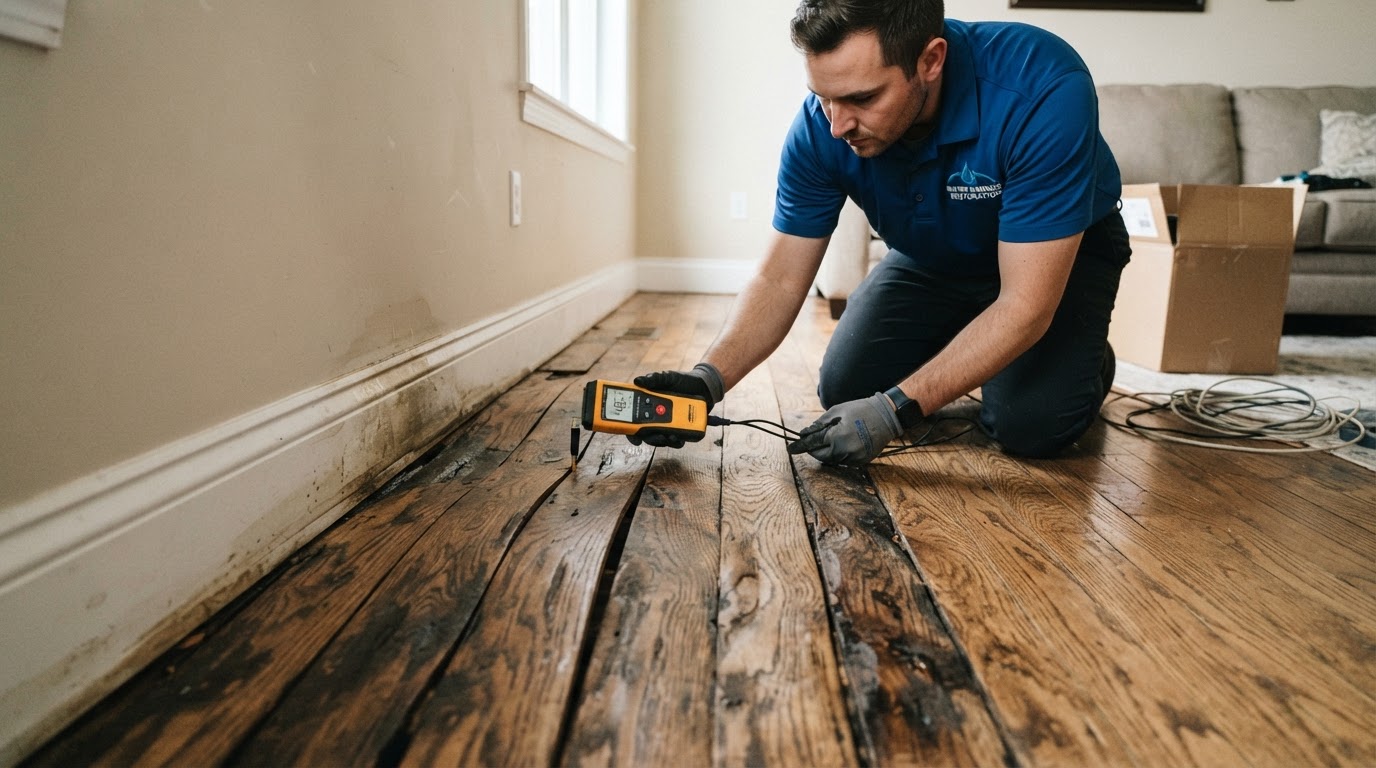
Water from a slab leak can rise through the concrete and wet flooring from beneath, producing damp spots, discoloration, or darkening that appears without any visible fixture leak above.
Swollen or Warped Flooring
Hardwood, laminate, and engineered flooring that absorbs water from beneath can swell, cup, or warp as the material expands, often starting near baseboards or interior walls.
Water at Baseboards
Moisture appearing at the base of baseboards or along the bottom of walls can indicate water has risen from the slab into the wall bottom and floor assembly.
Warm Floor Area
A warm spot on the floor can sometimes indicate a hot water supply line leak beneath the slab, though this alone does not confirm the source and should be evaluated by a professional.
Musty Odor & Recurrent Dampness
A persistent musty odor or dampness that returns after drying can signal an ongoing hidden plumbing leak beneath the slab that continues to feed moisture into the floor assembly.
Unexplained Moisture Without a Fixture Leak
When flooring or baseboards are damp but no toilet, sink, or appliance is leaking, the source may be a pipe beneath the slab that requires leak-detection equipment to confirm.
How do I know if a slab leak caused water damage?
You may suspect a slab leak when flooring is damp, discolored, or warped near baseboards or interior walls without any visible fixture leak, or when a warm floor spot, musty odor, or recurrent dampness appears. However, the actual plumbing source should be confirmed by a licensed plumber or leak-detection professional using specialized equipment, since visible floor moisture can also come from other sources. Lakeland Water Damage Restoration assesses the resulting water damage to flooring, walls, and materials after the source is identified.
What Slab Leak Water Can Affect & Hidden Pathways
Water from a slab leak rises through the concrete foundation into the flooring, underlayment, and wall assemblies above. Because the water enters from beneath, it saturates materials from the bottom up, often wetting the subfloor, baseboards, and bottom wall plates before any visible damage appears on the surface. These hidden pathways explain why slab leak cleanup includes the wall bottoms and baseboards, not just the flooring.
Hardwood & Engineered Flooring
Wood flooring absorbs water from beneath and can cup, crown, or buckle as the boards expand. Prompt drying may improve salvage potential, but the degree of distortion and subfloor moisture influence whether boards can be saved.
Laminate & Vinyl Plank
Laminate flooring swells and delaminates when water enters from beneath, often requiring removal. Vinyl plank may sometimes be dried and reinstalled depending on the subfloor condition and whether water reached beneath the planks.
Carpet & Padding
Carpet and padding absorb water from the slab beneath, and padding that has been saturated often requires replacement while the carpet may sometimes be cleaned and dried depending on contamination.
Tile Systems
Tile itself resists water, but moisture can travel beneath tiles through grout lines and affect the thinset and subfloor beneath, where it cannot evaporate without targeted drying or access.
Baseboards & Bottom Wall Plates
Water that rises from the slab wets baseboards and the bottom plates of wall framing, where it can enter wall cavities and wet insulation and drywall behind the surface.
Adjacent Rooms
Moisture from a slab leak can travel beneath flooring into adjacent rooms, wetting materials that are not directly above the leak location and may show no visible damage from the surface.
Key point: Because slab leak water rises through the foundation into flooring, underlayment, and wall bottoms, the visible floor damage is often only the surface of a deeper moisture path. Moisture detection across the floor, baseboards, and wall assemblies is what separates a complete drying project from a surface cleanup.
Materials Affected by Slab Leak Water Damage
Slab leak water damage affects the flooring, underlayment, and wall assemblies that sit above the foundation. Because water enters from beneath the concrete, it saturates materials from the bottom up, often reaching the subfloor, baseboards, and bottom wall plates before visible damage appears. Understanding how each material responds to saturation helps explain the scope of slab leak cleanup.
Confirm Source Repaired
A licensed plumber or leak-detection professional diagnoses and repairs the leaking pipe beneath the slab so no additional water enters the floor assembly.
Assess Affected Areas
The flooring, baseboards, wall bottoms, and adjacent rooms are inspected for moisture that has risen from the slab into building materials above.
Extract Visible Water
Any standing water on the flooring surface is extracted to halt ongoing absorption into flooring, underlayment, and the subfloor.
Map Floor & Wall Moisture
Moisture meters trace water that has risen through the slab into flooring, underlayment, baseboards, bottom wall plates, and adjacent rooms.
Evaluate Flooring
Flooring is evaluated based on material type, saturation, duration, delamination, and drying feasibility to determine whether it can be dried or requires removal.
Dry & Dehumidify
Air movers and dehumidifiers dry salvageable flooring, subfloor, and wall materials, with access created where necessary to reach trapped moisture.
Monitor Moisture
Readings are taken over the drying period to confirm affected materials reach an appropriate dry standard before equipment is removed.
Slab Leak Water Damage Across Lakeland
Many Lakeland homes and businesses are built on concrete slab foundations, where plumbing lines are embedded in or run beneath the slab. A leak in one of these lines can allow water to rise through the concrete into flooring and wall assemblies, producing damage that appears at the floor level without any visible fixture leak. Central Florida's humidity also slows natural drying of flooring and wall materials after a slab leak, making controlled dehumidification more important for returning affected materials to an appropriate dry standard.
After the slab leak is located and repaired by a plumbing or leak-detection professional, most properties require moisture assessment and structural drying to address wet flooring, underlayment, and wall materials. Lakeland Water Damage Restoration focuses on the water that rose from the slab and affected building materials, while a licensed plumber handles the pipe repair beneath the foundation. This page concentrates on slab leak water damage specifically; the broader burst pipe and plumbing leak page covers pipe failures more generally. Related services such as structural drying, hidden moisture cleanup, and emergency water extraction are often part of the same project. Service-area pages are also available for surrounding communities across Polk County and Central Florida through our Service Areas section.
Slab Leak Water Damage Questions & Answers
What is a slab leak?
A slab leak is a plumbing leak in a water supply or drain pipe that is embedded in or runs beneath a concrete slab foundation. Because the pipe is hidden under the concrete, water from the leak often rises through the slab into flooring, baseboards, and wall assemblies before the source is identified. A licensed plumber or leak-detection professional confirms the location and repairs the pipe.
Who fixes a slab leak?
A licensed plumber or leak-detection professional locates and repairs the leaking pipe beneath the slab, which may involve spot repair, rerouting, or repiping depending on the situation. Lakeland Water Damage Restoration does not locate or repair slab plumbing; it focuses on the water that rose from the slab and affected flooring, baseboards, and wall materials. Both are often needed, with the source repaired so that drying can proceed.
Can a slab leak damage flooring?
Yes. Water from a slab leak rises through the concrete and saturates flooring from beneath, producing damp spots, discoloration, swelling, cupping, or warping. Hardwood, laminate, and engineered flooring absorb water and distort, while carpet padding often requires replacement. The extent of damage depends on how long the leak continued before discovery.
Can a slab leak wet drywall?
Yes. Water that rises from the slab can enter the bottom of wall assemblies, wetting baseboards, bottom wall plates, and the lower portion of drywall inside the wall cavity. This moisture may not be visible on the wall surface until staining or softness appears at the base of the wall.
Can water remain hidden beneath flooring after a slab leak?
Yes. Water from a slab leak saturates the underlayment and subfloor beneath flooring, where it cannot evaporate on its own. Even after the surface appears dry, moisture can remain trapped beneath flooring materials. Moisture meters are used to detect and map hidden water beneath the surface.
How is moisture checked after a slab leak?
Moisture is checked using moisture meters and thermal imaging across the flooring, baseboards, and wall bottoms above the suspected leak. Comparison readings between affected and unaffected areas help determine how far water has risen from the slab into building materials. This mapping guides where flooring is removed and where drying equipment is positioned.
Does flooring always need removal after a slab leak?
No. Whether flooring needs removal depends on the material type, saturation level, exposure duration, delamination, and whether effective drying can be achieved. Hardwood may sometimes be dried if addressed promptly, while laminate and saturated carpet padding often require removal. Each floor is evaluated based on moisture readings and material condition.
How long does drying take after a slab leak?
Drying time after a slab leak varies depending on the extent of saturation, the materials affected, the amount of water, humidity, temperature, airflow, and how quickly mitigation begins. There is no universal drying time, and moisture readings over the drying period confirm when affected materials have reached an appropriate dry standard.
Does insurance cover slab leak water damage?
Coverage depends on the source of the loss, policy terms, exclusions, endorsements, maintenance conditions, and the insurer's determination. A sudden pipe rupture beneath the slab is often handled differently than a slow leak that developed over time, and the distinction between the plumbing repair and resulting water damage can affect coverage. Property owners should review their policy and speak with their insurance carrier about the specific loss.
Slab Leak Water Damage Affecting Your Lakeland Property?
Call Lakeland Water Damage Restoration at (863) 614-1214 to discuss moisture assessment, flooring evaluation, and structural drying after a slab leak. You can also submit a service request below and our team will follow up.
Call (863) 614-1214Lakeland, FL 33810 • Serving Polk County & Central Florida
Request Slab Leak Water Damage Cleanup Service
Submit your details or call our Lakeland team directly.